

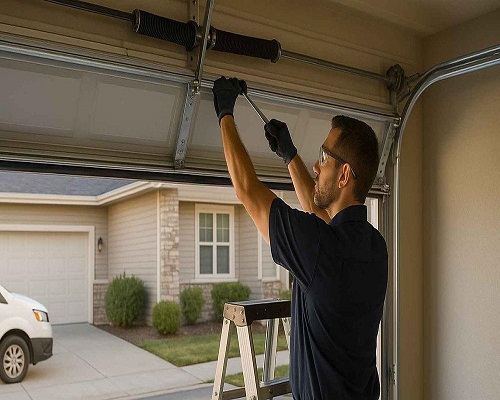
Your garage door is one of the most frequently used parts of your home. You may open and close it several times a day without thinking about how much work its springs, rollers, cables, tracks, and opener perform.
Over time, these components can wear out, become loose, or develop problems that affect the door's performance. Regular garage door maintenance helps identify potential issues early, improve reliability, and reduce the risk of unexpected breakdowns.
But how often should you service your garage door? For most homeowners, a professional inspection at least once a year is a useful starting point. However, the right schedule depends on how often you use the door, its age, its condition, and the manufacturer's recommendations.
In this guide, we will explain how often to service your garage door, what maintenance includes, which warning signs to watch for, and when to call a professional garage door technician.
For most residential garage doors, scheduling professional maintenance once a year is a good general recommendation.
An annual inspection gives a technician an opportunity to check the door's major components, identify signs of wear, and determine whether adjustments or repairs are needed.
However, some garage doors may need more frequent attention.
For example, a garage door used several times every day may experience more wear than one used only occasionally. Older doors and doors with a history of mechanical problems may also benefit from more frequent inspections.
Consider the following general guidelines:
Once a year: A reasonable starting point for many residential garage doors used under normal conditions.
Every six months: May be appropriate for heavily used doors, older systems, or doors with recurring maintenance concerns.
As needed: Any garage door showing unusual noises, uneven movement, or other signs of damage should be inspected promptly rather than waiting for the next scheduled service.
Always follow the maintenance schedule recommended by your garage door and opener manufacturers.
Regular maintenance is about more than keeping your garage door looking good. It helps ensure that the door and its operating system continue to work as intended.
Here are some important benefits of routine garage door service.
A garage door can develop problems gradually. Rollers may become worn, hardware may loosen, and the opener may begin making unusual noises.
Without regular inspection, these small warning signs may go unnoticed until the door stops working.
Professional maintenance can help identify developing issues before they lead to an unexpected breakdown.
Although maintenance cannot prevent every failure, it can help you address certain problems before they become more disruptive.
Garage doors contain several moving parts that work together every time the door opens or closes.
These components include springs, rollers, hinges, cables, tracks, and the garage door opener.
When parts are worn, improperly adjusted, or operating under unnecessary strain, they may experience additional stress.
Regular maintenance helps identify worn components and determine whether cleaning, adjustment, repair, or replacement is needed.
Garage doors are heavy, and some of their components operate under significant tension.
A damaged spring, frayed cable, loose track, or malfunctioning safety sensor can create a safety concern.
During a professional inspection, a technician can check important components and test the door's safety features according to the manufacturer's recommendations.
If a safety-related problem is discovered, it should be addressed promptly.
Does your garage door squeak, rattle, grind, or make a loud noise when opening?
These sounds can indicate worn rollers, loose hardware, inadequate lubrication, or another mechanical problem.
Regular maintenance can help identify the source of the noise and determine the correct solution.
Do not assume every noise can be fixed with lubricant. Grinding, popping, or sudden loud sounds may indicate a more serious problem that requires professional inspection.
Your garage door opener is designed to move a properly functioning door.
If the door becomes difficult to move because of damaged rollers, track problems, or spring issues, the opener may experience additional strain.
Maintaining the door's mechanical components can help reduce unnecessary stress on the opener.
If the opener struggles to lift the door, stops unexpectedly, or makes unusual noises, have the entire system inspected rather than replacing the opener without identifying the cause.
A professional garage door service appointment typically involves inspecting the door, its hardware, the opener, and its safety systems.
The exact service depends on the door's design, condition, and manufacturer's instructions.
Garage door springs help support the door's weight during opening and closing.
A technician can inspect the springs for visible signs of wear, damage, or failure.
Broken or damaged springs can make the door difficult or unsafe to operate. Spring repairs and replacements should be handled by trained professionals because the springs are under high tension.
Cables work with the spring system to help the garage door move evenly.
During maintenance, a technician may check for visible wear, fraying, looseness, or other signs of damage.
Damaged cables should not be handled or reconnected by homeowners. A professional can determine the appropriate repair and check related components.
Garage door tracks guide the rollers as the door moves.
A technician can inspect the tracks for damage, loose mounting hardware, or alignment problems. The rollers can also be checked for wear and smooth movement.
If the door shakes, moves unevenly, or makes grinding sounds, the tracks and rollers may need attention.
Bent tracks and off-track doors should be repaired professionally. Forcing the door to move can cause additional damage.
Garage door hinges and mounting hardware help connect and support the door's sections.
Over time, some hardware may loosen or wear out because of repeated use.
A technician can inspect the hardware and tighten or replace components where appropriate.
Homeowners should avoid adjusting hardware connected to spring systems or other high-tension parts.
The opener should be checked for signs of wear, unusual sounds, inconsistent operation, and other performance issues.
A technician may inspect the drive mechanism, mounting hardware, controls, and relevant electrical components.
If the opener stops working properly, the cause may be a mechanical problem with the door rather than a failure of the opener itself.
A complete inspection helps determine whether repair or replacement is necessary.
Modern automatic garage doors commonly use photoelectric safety sensors near the bottom of the tracks.
These sensors detect objects in the door's path and help prevent the door from closing when the sensor beam is interrupted.
During maintenance, the sensors should be checked for proper alignment, cleanliness, and operation according to the manufacturer's instructions.
If the garage door refuses to close, reverses unexpectedly, or displays a sensor warning, the safety system may need attention.
Never bypass or disable the safety sensors to make the door close.
A properly functioning garage door should move smoothly without excessive strain on the opener.
A technician can assess the door's movement and balance using the appropriate procedures for that system.
If the door is unusually heavy, moves unevenly, or will not stay in its expected position, there may be a problem with the springs or other mechanical components.
Do not attempt to test the balance manually if you suspect a broken spring or cable.
Some garage door components require periodic lubrication, while others do not.
Depending on the door and opener model, a technician may lubricate specified hinges, rollers, bearings, or other moving parts using a suitable product.
Using the wrong lubricant or applying it to the wrong components may cause problems. For example, tracks generally should not be coated with grease because it can collect dirt and debris.
Follow the manufacturer's maintenance instructions for your specific garage door system.
Yes. Homeowners can perform several basic maintenance tasks without taking apart the garage door system.
Simple tasks can help keep the area clean and make it easier to notice developing problems.
Here are some useful maintenance steps.
Remove boxes, tools, bicycles, and other objects that could interfere with the door's movement.
Keep the area around the tracks and safety sensors clear.
Gently wipe the sensor lenses with a soft, dry cloth if dust or dirt collects on them.
Do not pull on the sensor wires or adjust electrical connections.
Pay attention to new squeaking, grinding, rattling, or popping noises.
A change in the way your garage door sounds can be an early sign that something needs attention.
Observe the door from a safe distance as it opens and closes.
Look for uneven movement, shaking, hesitation, or unexpected reversing.
Keep children, pets, and objects away from the moving door.
Your garage door and opener manuals may contain specific cleaning, lubrication, testing, and maintenance recommendations.
Following these instructions helps you avoid using unsuitable products or performing maintenance that could damage the system.
Important: Do not attempt to repair or adjust garage door springs, cables, bottom brackets, or other high-tension components yourself.
Even if your next annual inspection is months away, certain symptoms mean you should have your garage door checked sooner.
Watch for these warning signs:
The garage door makes new or unusually loud noises.
The door opens or closes more slowly than normal.
The door shakes or moves unevenly.
The opener struggles to lift the door.
The garage door reverses unexpectedly.
The door becomes stuck halfway.
The safety sensor lights indicate a problem.
The door appears crooked or has come off its tracks.
You notice a broken spring or damaged cable.
The remote or wall control works inconsistently.
Some of these symptoms can indicate a serious mechanical or safety issue.
If the door is crooked, off track, unusually heavy, or has a suspected broken spring or cable, stop operating it and arrange professional service.
Yes. How often you use your garage door is an important factor when planning maintenance.
A household that opens and closes the door many times a day may put more cycles on its springs, rollers, hinges, and opener than a household that uses the door occasionally.
Commercial garage doors and doors serving busy properties may need a different maintenance schedule because of their higher usage.
The age of the door, environmental conditions, component quality, and history of repairs can also affect how often the system should be inspected.
A technician can recommend a maintenance schedule based on your particular door and how frequently it operates.
For many homeowners, preventive maintenance is a practical way to identify problems and understand the condition of their garage door system.
A maintenance visit may reveal worn rollers, loose hardware, sensor problems, or other issues that need attention.
The cost depends on the type of door, the service provided, and whether repairs or replacement parts are necessary.
Keep in mind that an inspection cannot guarantee that a component will never fail. Springs, cables, and other parts can still break because of wear or unexpected damage.
However, regular maintenance can help you make informed decisions and reduce the chance of overlooking developing problems.
Ask your garage door service provider what the maintenance visit includes and whether any recommended repairs will cost extra.
Older garage doors may need closer attention, particularly if they have worn components or a history of operating problems.
However, age alone does not determine the correct service interval. A well-maintained older door may operate reliably, while a newer door can develop problems because of damage, poor installation, or heavy use.
If your garage door is several years old, a professional inspection can help assess its condition.
The technician can check the springs, cables, rollers, tracks, opener, and safety features and explain which parts need attention.
If repairs become frequent or replacement parts are difficult to obtain, you may also want to compare the cost of continued repairs with the cost of installing a new garage door system.
Weather changes, regular use, and normal component wear can affect garage door performance over time.
If you live in Indianapolis, scheduling regular garage door maintenance can help you identify potential issues and keep your system operating as intended.
A professional technician can inspect your garage door's major components, check its safety features, and recommend repairs when needed.
Whether your door needs a routine inspection or you have noticed unusual noises, slow movement, or opener problems, addressing the issue early can help prevent additional damage.
If your garage door is not operating properly, do not wait for the problem to become worse. Professional garage door service in Indianapolis can help you understand what is wrong and determine the next steps.
For many residential garage doors, a professional inspection once a year is a useful starting point. Doors that are used heavily, are older, or have recurring problems may need more frequent service.
Without regular inspection, worn rollers, loose hardware, sensor problems, and other issues may go unnoticed. The door may eventually develop operating problems or require unexpected repairs.
Some components can be lubricated by homeowners if the manufacturer allows it. Use the recommended lubricant and follow the product instructions. Do not lubricate the tracks unless the manufacturer specifically instructs you to do so.
A broken spring, damaged cable, crooked door, off-track door, or sudden change in movement may indicate a serious problem. Stop operating the door and contact a professional technician.
No. Springs wear out over time and have a limited cycle life. Maintenance can help identify visible wear or other concerns, but it cannot guarantee that a spring will not break.
The opener should be included in the maintenance and inspection of the complete garage door system. If it makes unusual noises, struggles to lift the door, or stops working reliably, it may need additional diagnosis.
The time depends on the door's condition, its design, and the work required. A routine inspection may take less time than a visit involving adjustments, troubleshooting, or repairs. Ask your technician for an estimate based on your system.


