

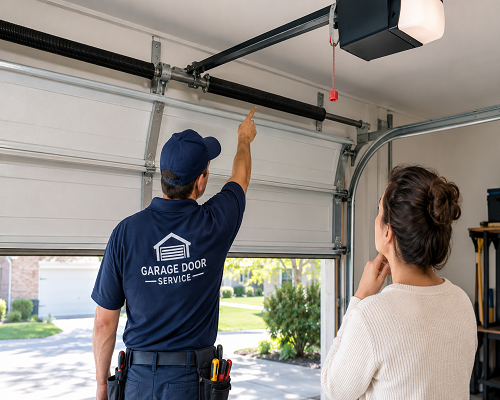
A garage door that will not open or close can quickly become a frustrating problem. Your garage door is used every day, and when it suddenly stops working, you may not know whether the problem is with the garage door opener, remote, springs, cables, tracks, or safety sensors.
Some garage door problems are simple to fix, while others require professional service. Understanding the common causes can help you identify what may be wrong and determine when it is time to call a garage door technician.
There are several reasons a garage door may stop working properly. The problem can come from the opener, electrical power, remote control, safety sensors, broken springs, damaged cables, or the door itself.
Before attempting any repair, pay attention to what the door is doing. Does it make a sound but not move? Does it start opening and then stop? Does it close and immediately go back up? These details can help identify the source of the problem.
The garage door opener is one of the first things to check when your door will not open or close.
If you press the remote or wall button and hear the opener running, but the garage door does not move, there may be a problem with the connection between the opener and the door.
If the opener does not make any sound at all, check whether it has power. A tripped breaker, unplugged opener, or electrical problem can prevent the system from working.
Do not attempt to open the opener housing or repair electrical components yourself. Garage door openers contain electrical parts that should be inspected by a qualified technician.
Sometimes the garage door itself is working properly, but the remote control is the problem.
A weak or dead battery can prevent the remote from sending the correct signal to the opener. Try replacing the batteries and test the remote again.
If the wall button works but the remote does not, the remote may need to be reprogrammed or replaced.
It is also important to make sure you are within the normal operating range of the opener and that nothing is blocking the signal.
Garage door safety sensors are designed to prevent the door from closing when something is in its path.
If the sensors are dirty, misaligned, damaged, or blocked, the garage door may refuse to close. In some cases, the door will begin closing and then immediately reverse.
Check the area around both sensors and make sure nothing is blocking them. You can also gently clean the sensor lenses with a soft, dry cloth.
If the sensors appear damaged or remain misaligned, professional inspection may be necessary.
A broken spring is another common reason a garage door will not open properly.
Garage door springs help support the weight of the door. When a spring breaks, the door can suddenly become extremely heavy. You may hear a loud popping sound, notice a visible gap in the spring, or find that the opener runs without being able to lift the door.
A garage door with a broken spring should not be operated repeatedly. The door can be extremely heavy and may cause injury or additional damage.
Spring replacement should be performed by an experienced garage door technician because garage door springs are under significant tension.
Garage door cables work with the springs and other components to help the door move safely.
If a cable comes off the drum, becomes loose, or breaks, the garage door may become crooked, stuck, or unable to move correctly.
You may notice that one side of the door is higher than the other or that the door looks uneven when you try to open it.
Do not attempt to pull or reconnect a damaged cable yourself. A professional technician can inspect the cables, drums, springs, and other related components to determine the cause of the problem.
A garage door can also stop opening or closing because it has come off its tracks.
An off-track door may look crooked, make unusual noises, or become stuck partway open or closed.
This problem can happen because of damaged rollers, an impact, worn components, loose hardware, or problems with the tracks.
Avoid forcing an off-track garage door. Continuing to operate it can cause additional damage to the rollers, tracks, panels, cables, or opener.
Professional garage door repair can help safely realign the door and identify why it came off the track.
Garage door tracks guide the rollers as the door moves up and down.
If a track becomes bent, loose, or damaged, the rollers may not move smoothly. The door may become noisy, slow, uneven, or completely stuck.
Small track problems can become bigger problems if the door continues operating.
A technician can inspect the tracks and determine whether they need adjustment, repair, or replacement.
During cold weather, moisture can sometimes cause parts of a garage door to freeze. Dirt, rust, damaged rollers, or worn hardware can also make the door difficult to move.
If the door is stuck, avoid repeatedly pressing the opener button. The opener may continue trying to lift the door and could become damaged.
A professional inspection can determine whether the problem is mechanical, electrical, or related to the opener.
A properly functioning garage door should be balanced so that the opener does not have to carry the entire weight of the door.
If springs or other components are worn or damaged, the door may become difficult to lift. The opener may struggle, stop during operation, or make unusual noises.
Do not assume that replacing the opener will solve the problem. A technician should inspect the entire garage door system first.
If your garage door remote and wall button both fail, the problem may be related to the opener or its power supply.
If the remote works but the wall button does not, there could be an issue with the wall control, wiring, or connection.
Avoid opening electrical components unless you are qualified to work with them. A garage door professional can test the system and identify the problem safely.
If your garage door will not open, start with a few basic checks:
If the door remains stuck, avoid forcing it or repeatedly operating the opener.
A garage door that will not close may have a problem with the safety sensors, tracks, rollers, opener, or another component.
If the door starts closing and then immediately opens again, check the safety sensors first. Make sure they are clean and properly positioned.
If the opener runs but the door does not move correctly, there may be a mechanical problem that requires professional inspection.
Never bypass or disable the garage door safety system just to make the door close.
Some basic troubleshooting is safe for homeowners, but certain garage door problems should always be handled by a trained professional.
Call a garage door technician if you notice:
Garage doors are heavy systems with components under high tension. Attempting the wrong repair can result in injuries or additional property damage.
If your garage door opener has stopped working, some doors can be disconnected from the opener using the emergency release and operated manually.
However, do not attempt this if the door is unusually heavy, crooked, off track, or has a broken spring or cable.
A damaged garage door can fall unexpectedly. If you are unsure whether the door is safe to operate manually, contact a professional garage door technician.
Regular maintenance can help reduce unexpected garage door problems.
Homeowners can:
Early attention to small problems can help prevent more expensive repairs later.


