

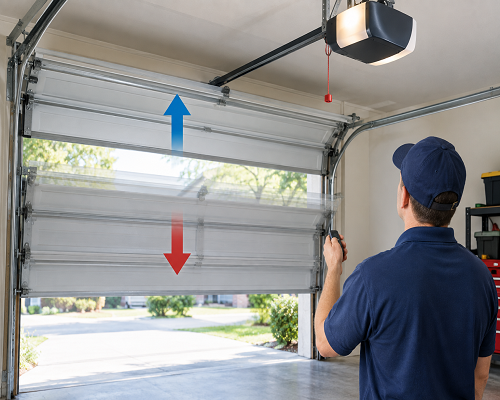
Have you ever pressed your garage door opener, watched the door open, and then noticed that it closes again immediately? This can be frustrating and may make it difficult to use your garage safely.
A garage door that opens and then closes by itself can have several possible causes. The problem may be related to the safety sensors, garage door tracks, springs, rollers, opener settings, or another part of the garage door system.
The good news is that some causes are simple to check. However, if the problem involves springs, cables, or other mechanical components, professional garage door service may be necessary.
In this guide, we will explain the most common reasons a garage door opens and then closes immediately and what you can do about them.
A garage door opener is designed to detect problems while the door is moving. When the opener detects resistance, an obstruction, or a safety issue, it may reverse the door automatically.
If your garage door opens normally but then closes immediately, the problem could be caused by:
Finding the exact cause is important because continuing to operate a malfunctioning garage door can sometimes make the problem worse.
Safety sensors are one of the most common things to check when a garage door is not operating correctly.
Most automatic garage doors have two safety sensors located near the bottom of the garage door tracks. They work together to detect objects or people in the path of the door.
If the sensors are dirty, blocked, or misaligned, the garage door may reverse instead of closing properly.
Safety sensors can stop working correctly because of:
Make sure there are no boxes, tools, vehicles, or other objects blocking the area between the sensors.
You can also gently clean the sensor lenses with a soft, dry cloth.
If the sensors still do not work properly, they may need adjustment or replacement.
Even if the sensors look clean, they may not be pointing directly at each other.
A small movement of one sensor can interrupt the invisible beam between them. This can cause the opener to believe that something is blocking the garage door.
If the sensors have been bumped or their brackets are loose, they may need to be realigned.
Avoid bypassing or disconnecting the safety sensors. They are an important safety feature designed to help prevent injuries and property damage.
Another possible cause is an object in the garage door's path.
Look around the floor and near the tracks for anything that could interfere with the door.
Common examples include:
Even a small object can sometimes prevent the door from moving correctly.
Remove anything that may be in the door's path and test the garage door again.
Garage door tracks guide the rollers as the door moves up and down.
If a track is bent, loose, dirty, or damaged, the garage door may have difficulty moving smoothly.
You may notice:
A damaged track can put additional stress on the garage door opener.
Do not try to force a severely damaged track back into position. A professional garage door technician can inspect the tracks and determine whether they need adjustment, repair, or replacement.
Garage door rollers help the door move smoothly along the tracks.
Over time, rollers can become worn, cracked, noisy, or damaged.
When rollers do not move properly, the garage door may experience additional resistance. This can cause the opener to detect a problem and reverse the door.
Replacing worn rollers can improve the movement of the garage door and reduce unnecessary stress on the opener.
If your garage door makes a grinding or squeaking sound while moving, the rollers may be one of the components that need inspection.
Garage door springs play an important role in supporting the weight of the door.
When springs become weak or break, the garage door may become difficult to lift or may not remain in the correct position.
Signs of a spring problem may include:
Garage door springs are under significant tension and can be dangerous to handle.
If you suspect a broken or damaged spring, do not attempt to repair or replace it yourself. Professional garage door spring service is the safest option.
A properly balanced garage door should move smoothly and should not place excessive strain on the opener.
If the springs or other components are not working correctly, the door may become unbalanced.
An unbalanced door can cause the opener to work harder than normal. It may also cause the door to stop, reverse, or behave unpredictably.
A garage door technician can inspect the balance of the door and check the springs, cables, rollers, and other hardware.
Sometimes the garage door itself is fine, but the opener is the source of the problem.
The opener may have a problem with its motor, control board, sensors, drive system, or settings.
Other signs of an opener problem can include:
If the garage door opens and then closes immediately without an obvious obstruction, the opener should be inspected.
Garage door openers use travel-limit settings to determine how far the door should open and close.
If these settings are incorrect, the opener may think the door has reached the wrong position.
This can sometimes cause unusual door movement or prevent the garage door from operating correctly.
Because opener settings vary by manufacturer and model, it is best to follow the manufacturer's instructions or have a professional technician inspect and adjust the opener.
Garage door cables work with the springs to help lift and lower the door.
If a cable becomes loose, damaged, or comes off the drum, the garage door may move unevenly or become stuck.
A cable problem may also place additional stress on the opener.
If you see a loose or broken cable, do not try to reconnect it yourself. Garage door cables are connected to components under tension and should be handled by a trained professional.
An off-track garage door can behave unpredictably and may not open or close correctly.
You may notice that the door is crooked, one side is higher than the other, or one or more rollers have moved outside the track.
Do not continue using the opener if the door is off track.
Operating an off-track garage door can damage the panels, rollers, cables, tracks, and opener.
Professional garage door repair can safely inspect the door and determine what caused it to come off the track.
If your garage door opens and then closes immediately, start with simple and safe checks.
Make sure there are no objects blocking the garage door.
Make sure the sensors are clean and that nothing is blocking the space between them.
Check for obvious signs of damage or objects blocking the tracks.
Pay attention to unusual sounds such as grinding, clicking, humming, or repeated motor sounds.
Notice whether the door moves evenly or whether one side moves differently from the other.
If the problem continues, stop operating the door and contact a professional garage door technician.
It depends on the cause of the problem.
If the issue is simply a dirty sensor, cleaning the sensor may solve the problem.
However, if you notice a broken spring, damaged cable, off-track door, bent track, or significant mechanical problem, continuing to operate the garage door may cause additional damage.
A malfunctioning garage door can also create a safety risk for people, pets, and vehicles.
When in doubt, stop using the door until it has been inspected.
It may be tempting to repeatedly press the remote or try to force the garage door closed when it keeps reversing.
This is not recommended.
If the opener is detecting resistance or a safety problem, repeatedly operating the door can put additional stress on the opener and mechanical components.
The better approach is to identify the cause of the problem and repair it properly.
Regular maintenance can help reduce the chance of unexpected garage door problems.
Homeowners can:
Regular inspections can help identify small problems before they become more expensive repairs.
You should contact a professional if your garage door continues to open and close unexpectedly after basic checks.
Professional service is especially important if you notice:
A trained technician can inspect the entire garage door system and identify the underlying cause instead of simply treating the symptom.
If your garage door opens and then closes immediately, you do not have to guess what is causing the problem.
A professional garage door technician can inspect the safety sensors, opener, springs, cables, rollers, tracks, and other components to determine why the door is reversing.
Whether the problem is a simple sensor issue or a more serious mechanical problem, getting the correct repair can help keep your garage door safe, reliable, and convenient to use.
If you are experiencing repeated garage door problems in Indianapolis, professional garage door repair can help restore your door to proper working condition.
A garage door may open and then close because of misaligned safety sensors, an obstruction, damaged tracks, worn rollers, an opener problem, or an issue with the springs or other hardware.
The opener may be detecting resistance or receiving an incorrect signal from the safety system. The sensors, tracks, rollers, opener settings, and mechanical components may need to be inspected.
Yes. Dirt or debris on the safety sensor lenses can interfere with the sensor signal and cause the opener to behave incorrectly.
A broken or weak spring can affect the balance and movement of the garage door. If you suspect a spring problem, avoid operating the door and contact a professional.
Not necessarily. The problem may be caused by the sensors, tracks, rollers, springs, or another component. A professional inspection can determine whether the opener actually needs repair or replacement.
Start by checking for obstructions and making sure the safety sensors are clean and aligned. If the problem continues, have the garage door and opener professionally inspected.
A garage door that opens and then closes immediately can be caused by a number of issues, from dirty safety sensors to damaged springs, cables, rollers, tracks, or the garage door opener.
Simple problems may be easy to identify, but mechanical issues should be handled by a trained garage door professional.
If your garage door continues to reverse, avoid forcing it to operate. A professional inspection can identify the cause and help prevent additional damage.
Keeping your garage door properly maintained and addressing problems early can help keep your door operating safely and reliably for years to come.


